
Why the tools that used to work stopped working. The difference between discipline and connection. And one reframe that changes how you respond when you feel completely out of options.
Calm in the Storm
ISSUE #3 | "NOTHING I DO WORKS"
FOR THE ADULTS WHO HAVEN'T GIVEN UP AnchorPointCalmintheStormapp.com
You're Not Doing It Wrong. You're Using the Wrong Map.
Hey —
Something we hear all the time:
"I've tried everything. Nothing works."
If you've said that — out loud, in your head, or quietly in the parking lot of a grocery store — this issue is for you.
Because here's what we've learned after decades of working with teenagers and the people who love them:
When nothing is working, it's almost never because you're a bad parent. It's almost never because your kid is broken. It's almost never because you haven't tried hard enough.
It's usually because the tools you're using were built for a different problem.
This issue, we're going deep on that.
We're going to talk about why the things that used to work stopped working. We're going to talk about the difference between discipline and connection — and why that difference matters more than almost anything else. We're going to give you one reframe that changes how you respond when you feel completely out of options.
We're also going to introduce you to the character who's quietly running the show in almost every hard moment you've had with your kid.
You've been waiting for this one.
Let's go.
Holding the line with you,
Kim & Trudy Founders, Anchor Point
Why Nothing Is Working
Here's the thing nobody tells you about parenting a teenager.
The tools that worked when they were seven — the timeouts, the consequences, the "if you do that again" warnings — those tools were built for a seven-year-old brain.
A teenager's brain is a completely different machine.
Not worse. Not broken. Different.
When your kid was little, they wanted your approval more than almost anything. That's why consequences worked. Taking something away hurt. Praise felt huge. The relationship between cause and effect was pretty clean.
Then something shifted.
Somewhere around middle school, the brain starts a massive renovation. Connections are being rebuilt. New wiring is going in. The part of the brain that cares about peer relationships suddenly gets louder than the part that cares about what you think.
This isn't a choice your kid made. It's biology.
So when you take away the phone and nothing changes — when you ground them and they seem completely unbothered — when you have the same conversation for the hundredth time and nothing sticks — it's not because you're failing.
It's because you're using a tool that was built for a different version of your kid.
The tools that worked at seven were built for a seven-year-old. Your teenager needs a different set.
Here's the stat that stopped us cold when we first read it.
A CDC study found that 76.9% of parents believe their teen always receives the social and emotional support they need. Only 27.5% of teens agree.
That's not a small gap. That's a canyon.
Most parents are working incredibly hard to show up for their kids. Most teens aren't feeling it. Not because the parents aren't trying — but because something is getting lost in translation.
That gap is what this issue is about.
The Difference That Changes Everything
Most of us grew up in homes where discipline meant consequences.
You did something wrong. Something was taken away. You got grounded. You got the lecture. The goal was to make the bad behavior stop.
And here's the thing — that model works. For a while. For certain kids. In certain situations.
But it has a ceiling.
Once a teenager decides they don't care about the consequence — once they've decided the relationship isn't worth protecting — consequences stop working entirely. They don't just stop being effective. They start making things worse.
Here's why.
Discipline that comes without connection feels like punishment. And punishment, for a teenager, doesn't produce reflection. It produces resentment.
Think about it from their side. They're already overwhelmed. They're already convinced you don't understand them. Then something goes wrong, and instead of feeling heard, they get a consequence. The message they receive isn't "I care about you." The message they receive is "I'm in charge and you messed up."
That's not a message that changes behavior. That's a message that builds walls.
Connection is different.
Connection says: I see you. I'm not going anywhere. Even when this is hard.
Connection doesn't mean no rules. It doesn't mean no consequences. It doesn't mean letting everything slide.
It means the rules come from a relationship, not from fear. It means your teenager knows that even when you're frustrated — even when you're setting a limit — you're still on their side.
That's the shift.
Discipline without connection is just control. Connection without discipline is just chaos. You need both — and connection has to come first.
Research from Penn State found that parental warmth during the teen years directly predicts closeness and trust later in life — more than any specific parenting strategy. The relationship is the strategy.

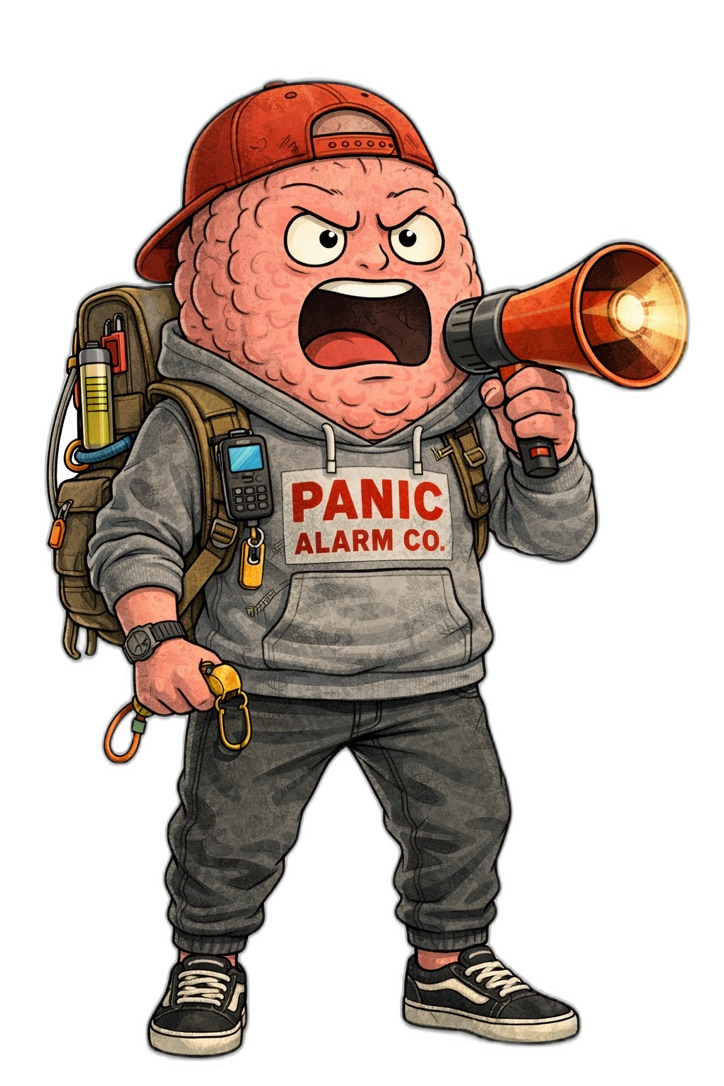
Your brain's alarm system.
SCOUT's job is to keep you safe. When something feels wrong — or even just uncertain — SCOUT fires first and asks questions later. That's not a flaw. That's survival. But sometimes SCOUT goes off when there's no real danger. That's when things get hard.
The Character Running the Show
In Issue #2, we introduced you to the Brain Team — the characters inside your teenager's brain that each have a specific job.
We teased one of them. We told you SCOUT was the alarm system. We told you SCOUT only responds to one thing: safety.
It's time to go deeper.
SCOUT's job is to protect.
Every second of every day, SCOUT is scanning. Is this safe? Is this a threat? Do I need to run? Do I need to fight? Do I need to shut down?
SCOUT is fast. SCOUT is good at the job. SCOUT has kept humans alive for thousands of years.
But here's the problem.
SCOUT can't tell the difference between a real threat and an emotional one.
A tiger in the woods? SCOUT fires. A parent saying "we need to talk"? SCOUT fires just as hard.
A car accident? SCOUT fires. A bad grade? SCOUT fires. A fight with a friend? SCOUT fires. A look across the dinner table that feels like disappointment? SCOUT fires.
When SCOUT fires, everything else shuts down. The part of the brain that can think clearly, make good decisions, and have a real conversation — it goes offline. Not because your teenager is being difficult. Because SCOUT is doing exactly what SCOUT was built to do.
This is why the lecture doesn't work when they're already upset. SCOUT is running the show. There's no room for new information.
This is why consequences in the middle of a meltdown make things worse. SCOUT reads consequences as more threat. More threat means more shutdown.
This is why the first move — always — is safety.
Not agreement. Not approval. Not letting everything go.
Just safety.
I'm not going to hurt you. I'm not going anywhere. You can breathe.
When SCOUT feels safe, SCOUT stands down. When SCOUT stands down, the rest of the brain comes back online. When the rest of the brain comes back online — that's when real conversations can happen. That's when consequences actually land. That's when change becomes possible.
You can't reach a brain that's in protect mode. Safety first. Everything else second.
One Reframe That Changes Everything
When nothing is working, most of us do one of two things.
We push harder. More consequences. Bigger limits. Louder voice.
Or we give up. We stop trying. We go quiet and hope it passes.
Neither of those works.
Here's the reframe.
Instead of asking "How do I make them stop?" — ask "What does my kid need right now that they don't know how to ask for?"
That's it. That's the whole thing.
It sounds simple. It isn't easy.
Because when your teenager is blowing up or shutting down, the last thing you want to do is wonder what they need. You want the behavior to stop. You want to feel like you're in control of something.
But the behavior is information. It's almost never the real problem. It's a signal that something underneath isn't okay.
The kid who blows up when you ask about homework isn't just being difficult. They might be terrified of failing. They might be exhausted. They might be carrying something from school that has nothing to do with you.
The kid who goes silent at dinner isn't just being rude. They might be overwhelmed. They might not have the words. They might be waiting to see if it's safe to talk.
When you shift from "how do I stop this" to "what do they need" — you stop fighting the signal and start looking for the source.
That's where the real work is.
Try this tonight:
The next time something escalates, pause before you respond. Take one breath. Then ask yourself quietly — not out loud, not to them — what might be going on underneath this?
You don't have to say anything different right away. Just let the question change how you're seeing the moment.
That shift — from reaction to curiosity — is the beginning of everything.
Behavior is a message. Your job isn't to silence it. Your job is to understand it.
*Composite story based on real experiences. Names changed.
"My daughter is sixteen. For two years, I tried everything. Grounding. Taking her phone. Sitting her down for serious talks. Calling her therapist. Making charts. Making deals.
Nothing worked. Nothing.
I was so tired I stopped trying to fix it. I just started sitting near her. Not talking. Just being there.
One night she was watching something on her laptop and I sat down on the other end of the couch. I didn't say anything. She didn't say anything. We just sat there for forty minutes.
When she got up to go to bed, she said, 'Thanks for sitting with me, Mom.'
I didn't know what to do with that. I still don't, completely. But something shifted after that night. Not everything. Not fast. But something."
— Anonymous, mother of a 16-year-old
Want to share your story? We'll never use your name unless you ask us to. Your story could be the thing another parent needs to hear tonight.
"They're Fine" — A Deep Dive on What Teens Don't Say
We're going into Pain Point #3. Why teenagers say they're fine when they're not — and what's actually happening when they go quiet. How to tell the difference between "I need space" and "I need help." And one question that opens more doors than any other.
We'll also go deeper on the Brain Team — and introduce you to the character who shows up when SCOUT finally stands down.
The Anchor Point app gives you real-time, step-by-step guidance in the exact moment things escalate. Describe what's happening. Get expert-backed direction in about 30 seconds. Track what works so the next time is easier.
AnchorPointCalmintheStormapp.com
If you want to understand the Brain Team more deeply — including SCOUT, what triggers the alarm, and how to help your teenager build a calmer nervous system — our ebook series covers all of it in plain language. No jargon. Just the stuff that actually helps.
Share this with someone who needs it. Forward this email. They'll thank you.
"You don't need to be perfect. You need to be present."
ANCHOR POINT | Calm in the Storm AnchorPointCalmintheStormapp.com