Why staying connected through hard seasons matters more than getting every moment right.
Calm in the Storm
ISSUE #15 | "STILL HERE" FOR THE ADULTS WHO HAVEN'T GIVEN UP
anchorpointcalminthestorm.com
The Power of Staying Put.
Hey —
If you've been reading these issues, trying the tools, and showing up day after day for a young person who is struggling, you already know how exhausting the work of connection can be.
You set boundaries, and they test them. You offer a window, and they slam it shut. You validate their feelings, and they tell you that you don't understand. It's easy to look at the messiness of the relationship and wonder if anything you are doing is actually making a difference. It's easy to feel like you are failing because the hard seasons are lasting longer than you thought they would.
We understand the impulse. When the pushback is constant, you want proof that your effort matters. You want to see the payoff. That's not a parenting failure—that's human nature. But here's what the science of resilience tells us: the payoff isn't always a perfectly behaved child. Sometimes, the payoff is simply a child who survives.
And the single most powerful factor in that survival is you.
Holding the line with you,
Kim & Trudy Founders, Anchor Point

The Protective Factor
When researchers study children who have faced serious hardship, adversity, or trauma, they look for the factors that allow some young people to thrive despite the odds. The findings are remarkably consistent across decades of study. The most common factor for children who develop resilience is at least one stable, committed relationship with a supportive adult.
School connectedness—the feeling that adults value and support them—is linked to better mental health, lower risk behaviors, and higher academic achievement. Positive adult-child relationships are associated with lower rates of depression and anxiety later in life.
Staying connected doesn't mean you fix every problem. It doesn't mean you accept harmful behavior or never set limits. It means the relationship remains available through the boundaries, the pauses, and the hard seasons. When a young person pushes you away, they are often testing the strength of the tether. When you don't break, you prove that they are worthy of being held.
You don't have to be a perfect adult to be a protective factor. You just have to be a present one.
Meet SPOTLIGHT
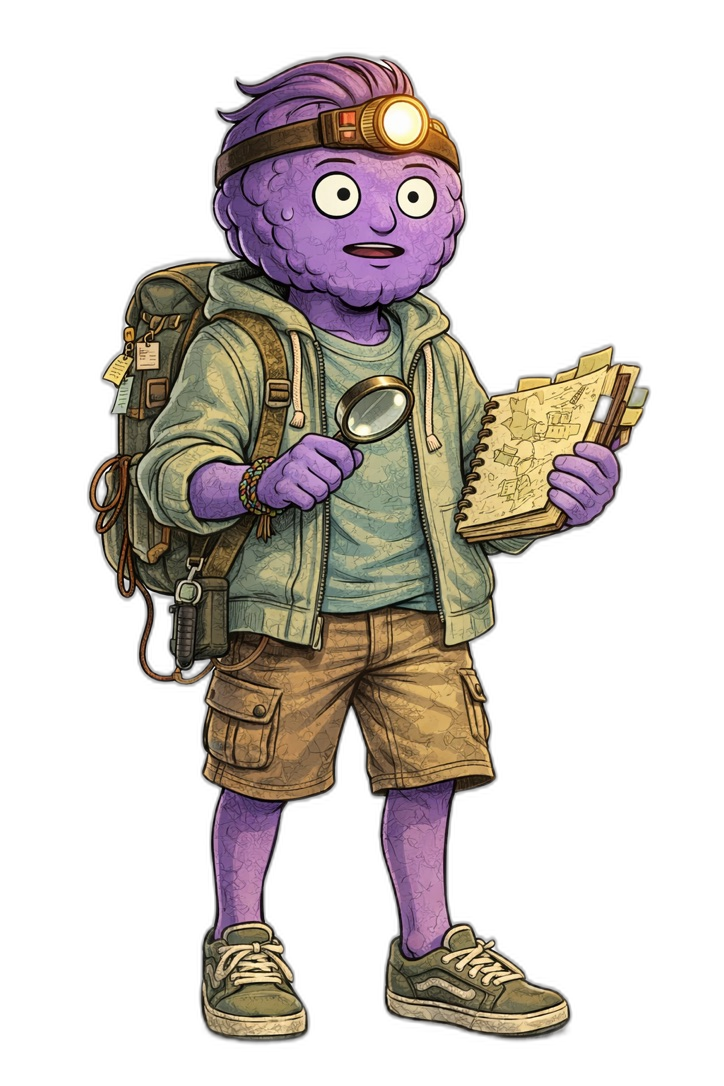
SPOTLIGHT is the Brain Team's curiosity engine. SPOTLIGHT notices what feels meaningful and turns toward it. A small signal from a caring adult may not get a visible response, but it can still register as proof that connection remains. Over time, those signals help a young person know where it is safe to turn.

Your brain's curiosity engine.
SPOTLIGHT is always looking for something interesting. New ideas, new experiences, new ways of seeing the world. SPOTLIGHT is what makes young people creative, passionate, and deeply alive. It's also what makes it hard to sit still in a classroom that doesn't feel relevant.
Understanding SPOTLIGHT can help you see why small moments of connection still matter. Find them at anchorpointcalminthestorm.com.
The "Still Here" Signal
Every issue, one tool. Not a program. Not a lecture. One thing you can use this week.
When the relationship feels strained and conversation is too difficult, you still need a way to communicate safety. The next time you are in a hard season with a young person, establish a "still here" signal.
Try this practice:
Find one small, repeatable act of connection that does not demand a response. Leave a sticky note on their mirror. Tap their shoulder twice when you walk by. Send a text with just a specific emoji. Do it consistently, especially when things are tense.
You are removing the pressure of a full interaction while maintaining the drumbeat of connection. You are letting them know that the relationship survives the conflict. What they do with that signal is entirely up to them. And sometimes, knowing the signal is coming is the only anchor they have. Your steady effort matters, even when they cannot show you that it does.
The Anchor Point App has more tools like this one — built for the real moments, not the ideal ones. anchorpointcalminthestormapp.com.
Composite story based on real experiences. Names changed.
"My 16-year-old and I barely spoke for six months. Every interaction turned into a fight, so we mostly just avoided each other. I felt like I had completely lost him.
I didn't know what else to do, so every morning before I left for work, I started leaving a glass of water and a granola bar on his nightstand. I never woke him up. I never asked if he ate it. I just left it there.
Months later, things had finally started to thaw. We were sitting in the kitchen, and he looked at me and said, 'You know, even when I hated everything, I always woke up to that granola bar. It was the only thing that felt normal.' I realized then that I didn't need the perfect words. I just needed to leave the water."
— Anonymous, mother of a 16-year-old
Want to share your story? We'll never use your name unless you ask us to.
"You don't have to be a perfect adult to be a protective factor. You just have to be a present one."
— Kim & Trudy
© Anchor Point · Calm in the Storm · anchorpointcalminthestorm.com You're receiving this because you signed up at anchorpointcalminthestorm.com. To unsubscribe, reply to this email with "unsubscribe" in the subject line.