
Why some young people get stuck in anxiety loops — and how to offer confidence without feeding the spiral.
Calm in the Storm
ISSUE #12 | "THE SPIRAL" FOR THE ADULTS WHO HAVEN'T GIVEN UP
anchorpointcalminthestorm.com
The Reassurance Trap.
Hey —
If you've ever watched a young person spin out over a worry, you know the exhausting loop that follows.
They ask you if it's going to be okay. You tell them it is. They ask if you're sure. You say yes. They ask what happens if the worst-case scenario comes true. You explain why it won't. For about three minutes, the tension drops. And then, the questions start all over again.
It feels like you are pouring water into a bucket with a hole in the bottom. You are trying to offer comfort, but the comfort never seems to stick.
We understand the impulse. When something is causing a child pain, you want to remove it. You want to promise them that everything will work out perfectly. That's not a parenting failure—that's love. But here's what the research keeps showing: anxiety doesn't want answers. Anxiety wants certainty. And because absolute certainty doesn't exist, the reassurance never lasts.
The goal isn't to promise them the world is perfectly safe. The goal is to help them trust that they can handle it even when it isn't.
Holding the line with you,
Kim & Trudy Founders, Anchor Point
Why the Loop Never Ends
When a young person is stuck in an anxiety spiral, their brain is treating a perceived threat as an immediate danger. They are seeking reassurance not to solve a problem, but to regulate their nervous system.
The problem is that reassurance acts like a quick-fix patch. It lowers their distress in the short term, but it inadvertently reinforces the anxiety in the long term. It teaches their brain that the only way to feel safe is to get an adult to guarantee the outcome. When the adult isn't there, or when the adult can't guarantee the outcome, the panic spikes again.
To break the cycle, you have to stop answering the anxiety and start addressing the nervous system underneath it. This means shifting from trying to fix the worry to validating the feeling and offering your calm presence instead. Calm can spread between people—it's part of a process called co-regulation. You don't have to argue with their fear. You just have to anchor them while they feel it. Their brain is trying to find safety. Yours is trying to give it. Both of you are doing the best you can.
Meet THINKER
THINKER is the analyst of the Brain Team. THINKER's job is to plan, prepare, and protect by anticipating what might go wrong. But when THINKER gets overwhelmed by uncertainty, planning turns into rumination, and logic turns into an endless loop of "what ifs."
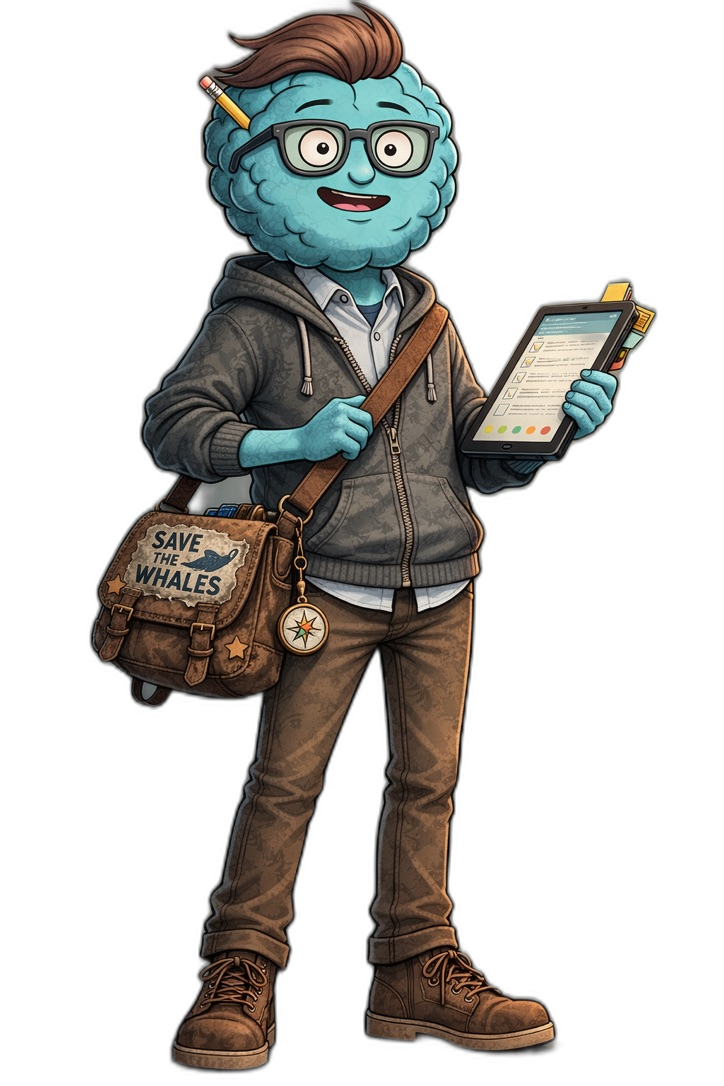
Your brain's problem-solver.
THINKER is the part of your brain that slows down, weighs options, and figures things out. THINKER is still being built during the growing-up years — which means it's not always available when you need it most. That's not an excuse. It's just the truth.
Understanding how to help THINKER step back from the edge changes how you respond to anxiety. Find them at anchorpointcalminthestorm.com.
The Confidence Pivot
Every issue, one tool. Not a program. Not a lecture. One thing you can use this week.
The next time you find yourself caught in a reassurance loop, resist the urge to promise that everything will be fine. Instead, validate the fear and pivot to their capability.
Try saying this:
"I can see how big this feels right now. I won't pretend I know exactly what will happen, but I know you can handle hard things, and I'll be right here with you while you do."
You are acknowledging their reality without feeding the anxiety cycle. You are offering your presence instead of a guarantee. What they do with that opening is entirely up to them. And sometimes, knowing you believe in their strength is exactly what they need to find it themselves. Offering confidence instead of certainty takes practice, and every steady attempt counts.
The Anchor Point App has more tools like this one — built for the real moments, not the ideal ones. anchorpointcalminthestormapp.com.
Composite story based on real experiences. Names changed.
"My middle schooler used to ask me every night if I had locked the doors. If I said yes, she'd ask if I checked the back door. Then the windows. It was an exhausting ritual that could take twenty minutes before she'd sleep.
One night, I realized I was just feeding the beast. So when she asked, I sat on the edge of her bed and said, 'You're feeling really unsafe tonight, aren't you?' She nodded. I said, 'I know that feeling. I'm not going to list all the locks again, but I am going to sit right here and read my book until your body feels tired enough to sleep.'
She fought it at first. She begged me to just check the back door one more time. But I stayed calm and stayed put. It took a few rough nights, but eventually, the questions stopped. She didn't need the locks checked. She just needed to know I wasn't afraid of her fear."
— Anonymous, mother of a 12-year-old
Want to share your story? We'll never use your name unless you ask us to.
"The Long Game"
Why progress often feels invisible—and how to spot the tiny, nonlinear shifts that prove your young person is actually building new skills.
"Anxiety doesn't want answers. Anxiety wants certainty. And because certainty doesn't exist, the reassurance never lasts."
— Kim & Trudy
© Anchor Point · Calm in the Storm · anchorpointcalminthestorm.com You're receiving this because you signed up at anchorpointcalminthestorm.com. To unsubscribe, reply to this email with "unsubscribe" in the subject line.