
Why shutdown is protection, not rejection — and how to keep connection possible without forcing a conversation.
Calm in the Storm
ISSUE #11 | "THE WINDOW AND THE WALL" FOR THE ADULTS WHO HAVEN'T GIVEN UP
anchorpointcalminthestorm.com
When the Door Closes.
Hey —
If you've watched this happen, you already know the helpless feeling that comes with it.
You ask a question, or you try to offer help, or you just walk into the room—and you watch the wall go up. The physical withdrawal. The one-word answers. The complete shutdown. It feels like rejection, and when you are tired and trying your best, rejection stings. So you push harder, trying to force the conversation, and the wall only gets thicker.
When you care about a young person, their silence can feel like a failure. But here is what the research tells us about what is actually happening in those moments: they aren't shutting you out because they don't care. They are shutting down because their nervous system is overwhelmed, and withdrawal is the only protection they have left.
They are doing the best they can with the brain they have right now. So are you. And understanding the difference between a wall and a window changes everything.
Holding the line with you,
Kim & Trudy Founders, Anchor Point
Shutdown is Protection, Not Rejection
When a young person's stress response is triggered, their brain doesn't always choose to fight or flee. Sometimes, it chooses to freeze. The freeze response—the emotional and physical shutdown—is a biological mechanism designed to protect a nervous system that cannot process any more input.
What looks like defiance or apathy is often just a system that has gone offline. You cannot reason with a nervous system in this state. The cognitive part of the brain that handles logic, conversation, and problem-solving is temporarily unavailable. Pushing for answers or demanding engagement during a shutdown doesn't open the door; it just adds more stress to an already flooded system.
But here is the shift: your job in that moment is not to tear down the wall. Your job is to keep a small window open.
When a young person shuts down, they are often bracing for you to leave or to get angry. They expect the connection to break. When you stay steady—when you accept the wall without taking it personally—you signal to their nervous system that they are safe. You don't have to fix it. You just have to prove that the relationship can survive their silence. Their brain is doing the best it can to feel safe. So are you.
SCOUT is the Brain Team's first responder. SCOUT watches for danger and acts fast. Sometimes that means fighting or running. Other times, it means going quiet and pulling away. Learning what settles SCOUT can help you keep connection possible without forcing a conversation.
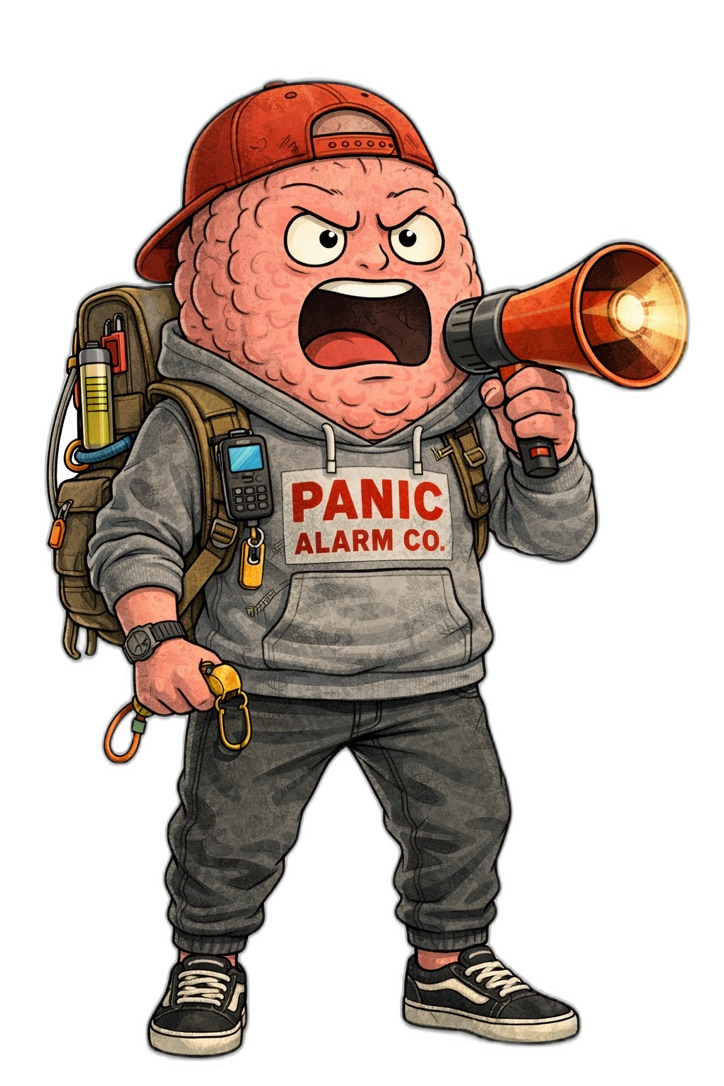
Your brain's alarm system.
SCOUT's job is to keep you safe. When something feels wrong — or even just uncertain — SCOUT fires first and asks questions later. That's not a flaw. That's survival. But sometimes SCOUT goes off when there's no real danger. That's when things get hard.
Understanding SCOUT can change what you see when the wall goes up. Find them at anchorpointcalminthestorm.com.
The Open Window
Every issue, one tool. Not a program. Not a lecture. One thing you can use this week.
We understand the impulse. When a young person shuts down, you want to pull them back. You want to fix whatever is hurting them, or at least get them to talk to you. That's not a parenting failure—that's love. But here's what actually works when the wall goes up.
The next time you face a complete shutdown, stop pushing for a conversation and try offering this instead:
"You don't have to talk right now. I'm going to be right here when you're ready."
Then, give them space. You are removing the demand for interaction while maintaining the offer of connection. You are letting them know that their silence doesn't scare you away. What they do with that opening is entirely up to them. And sometimes, just leaving the window unlatched is the most important thing you can do. Keeping that window open is real work, and it counts even before they respond.
The Anchor Point App has more tools like this one — built for the real moments, not the ideal ones. anchorpointcalminthestormapp.com.
Composite story based on real experiences. Names changed.
"My nephew moved in with me last year. The first few months, whenever he got overwhelmed, he would just disappear into his hoodie. Headphones on, eyes down, totally unreachable.
I used to stand in his doorway and talk at him, trying to pry him open. It always ended in an argument. Finally, I stopped. One Tuesday, he came home, dropped his bag, and put the hood up. I just set a plate of food on his desk and said, 'You don't have to talk. I'm around if you need me.'
He didn't say anything. But an hour later, he came out to the kitchen and asked if I wanted to watch a show. He didn't want to talk about what was wrong, but he wanted to be in the same room. I realized then that I didn't need to break down his walls. I just needed to let him know I was sitting on the other side of them."
— Anonymous, uncle and guardian
Want to share your story? We'll never use your name unless you ask us to.
"The Spiral"
Why some young people get stuck looping on the same anxieties—and the difference between reassuring them and actually helping them regulate.
"Your job is not to tear down the wall. Your job is to keep a small window open."
— Kim & Trudy
© Anchor Point · Calm in the Storm · anchorpointcalminthestorm.com You're receiving this because you signed up at anchorpointcalminthestorm.com. To unsubscribe, reply to this email with "unsubscribe" in the subject line.