
The Pressure Cooker

Why your teen explodes over small things — and the one habit that can change the entire trajectory of an evening.

ANCHOR POINT

Calm in the Storm

ISSUE #5 | "THE PRESSURE COOKER" FOR THE ADULTS WHO HAVEN'T GIVEN UP

anchorpointcalminthestorm.com

FROM THE ANCHOR DESK

It Wasn't Really About the Dishes.

Hey —

You know the moment.

Everything is fine. Or fine enough. And then something small happens — a glass on the counter, an eye roll, a snap at a sibling — and suddenly it's not fine anymore. Yelling. Tears. Doors. A fight that came out of nowhere and left everyone shaken.

And you're standing there thinking: what just happened?

Here's what happened.

It wasn't about the dishes.

It was never about the dishes.

This issue is about what's actually building up underneath — and the one simple habit that can change the entire trajectory of an evening before things go sideways.

We're also introducing you to the third member of the Brain Team. The one who's been carrying more than anyone realized.

Let's get into it.

Holding the line with you,

Kim & Trudy Founders, Anchor Point

THE DEEP DIVE

Why Small Things Cause Big Explosions

Here's something that might reframe every fight you've had in the last six months.

Your teenager's nervous system is not a light switch. It's a pressure gauge.

Every stressor that hits them during the day adds to it. A test they weren't ready for. A friend who didn't text back. A comment in the hallway. A worry they can't name but can't shake.

None of those things, on their own, would cause a meltdown.

But they stack.

By the time your teen walks through the door, that gauge might already be at 80%. And you don't know that. They don't even know it — because teenagers are not great at reading their own internal states. That's a developmental fact, not a character flaw.

So when you ask them to unload the dishwasher, you're not asking them to unload the dishwasher.

You're adding the last 20%.

The explosion isn't about the dishwasher. It's about everything that came before it

Meet FUEL

You've already met SCOUT and THINKER.

Now meet the third member of the Brain Team.
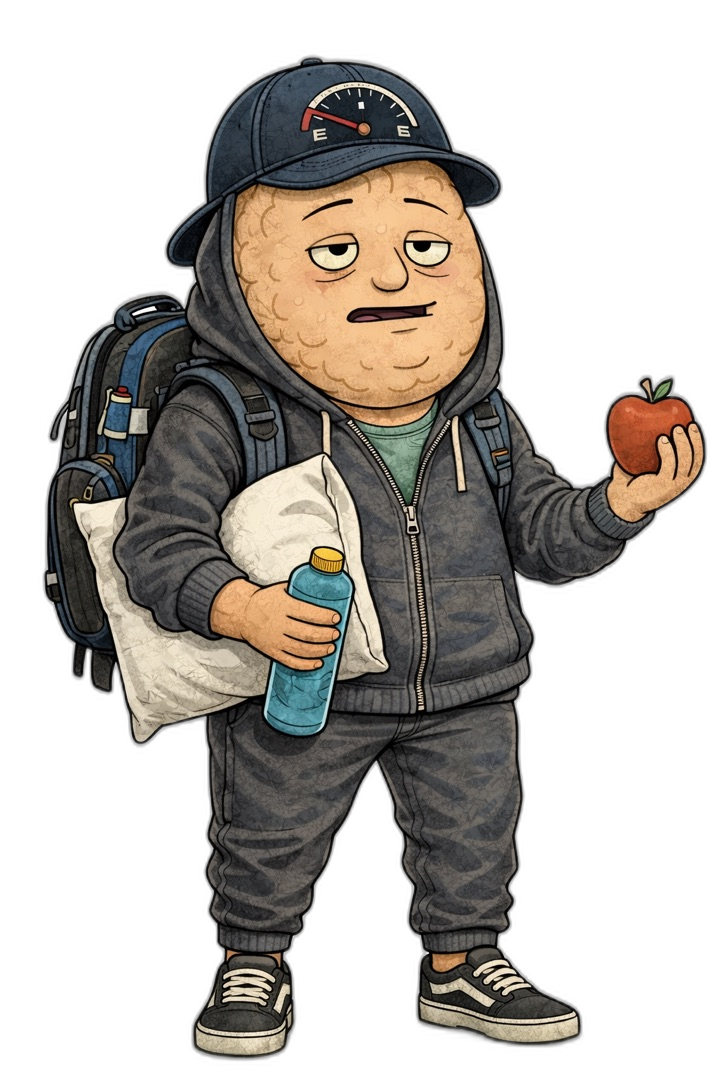
FUEL — Brain Team character
Brain Team

FUEL

Your brain's energy gauge.

FUEL tracks how much is left in the tank. Sleep, food, stress, connection — FUEL is watching all of it. When FUEL is low, everything is harder. Emotions are bigger. Patience is shorter. It's not attitude. It's an empty tank.

FUEL manages energy — physical, emotional, and mental. When FUEL is full, your teen can handle things. When FUEL is running low, everything costs more. Patience. Focus. Kindness. The same situation that was manageable on a full tank becomes overwhelming on an empty one.

What depletes FUEL? What refills it? And how do you know which one your teen is running on right now?

That's exactly what the Brain Team books go deep on — written for kids and teens, but built for the adults who love them.

Find them at anchorpointcalminthestorm.com.

Why Home Is Where It Happens

Here's something that might actually be a compliment, even though it doesn't feel like one.

Most teenagers hold it together at school. With their friends. In public.

And then they come home and fall apart.

If that's happening in your house, it means something important: your home is the safest place they have.

The explosion happens at home because home is where they don't have to perform. Home is where — even if it doesn't feel like it — they trust that you will still be there after the storm.

That's not a failure of your parenting. That's the result of it.

THE ANCHOR TOOL | THIS WEEK'S PRACTICE

The Pressure Check-In

Every issue, one tool. Not a program. Not a lecture. One thing you can use this week.

At some point in the first thirty minutes after your teen gets home, ask them this:

"On a scale of 1 to 10, how full is your backpack today?"

That's it.

If they say 8, you know tonight is not the night for hard conversations or homework battles. If they say 3, you know there's room to connect.

It doesn't demand a story. It just opens a door — and lets them decide whether to walk through it.

Try it once this week. See what happens.

The Anchor Point App has more tools like this one — built for the real moments, not the ideal ones. anchorpointcalminthestormapp.com.

REAL TALK | A STORY FROM THE TRENCHES

Composite story based on real parent experiences. Names changed.

"My son is fifteen. Good kid. His teachers like him. His friends like him.

At home, he was a different person. Slamming doors. Snapping at his sister. Refusing everything.

One night, after a blow-up over a charger, I sat down next to him once things calmed down. I didn't lecture. I just said, 'That felt like it was about more than the charger.'

He was quiet for a long time.

Then: 'I'm just really tired, Mom. I'm tired all the time and I don't know why.'

He wasn't difficult. He was depleted.

Once I understood that, everything changed."

— Anonymous, mother of a 15-year-old

Want to share your story? We'll never use your name unless you ask us to.

COMING UP IN ISSUE #6

"The Comparison Trap"

What social media is actually doing to your teen's brain — and the one conversation that helps more than screen time limits.

THE ANCHOR LINE

"It wasn't about the dishes. It was never about the dishes."

— Kim & Trudy

© Anchor Point · Calm in the Storm · anchorpointcalminthestorm.com You're receiving this because you signed up at anchorpointcalminthestorm.com. To unsubscribe, reply to this email with "unsubscribe" in the subject line.